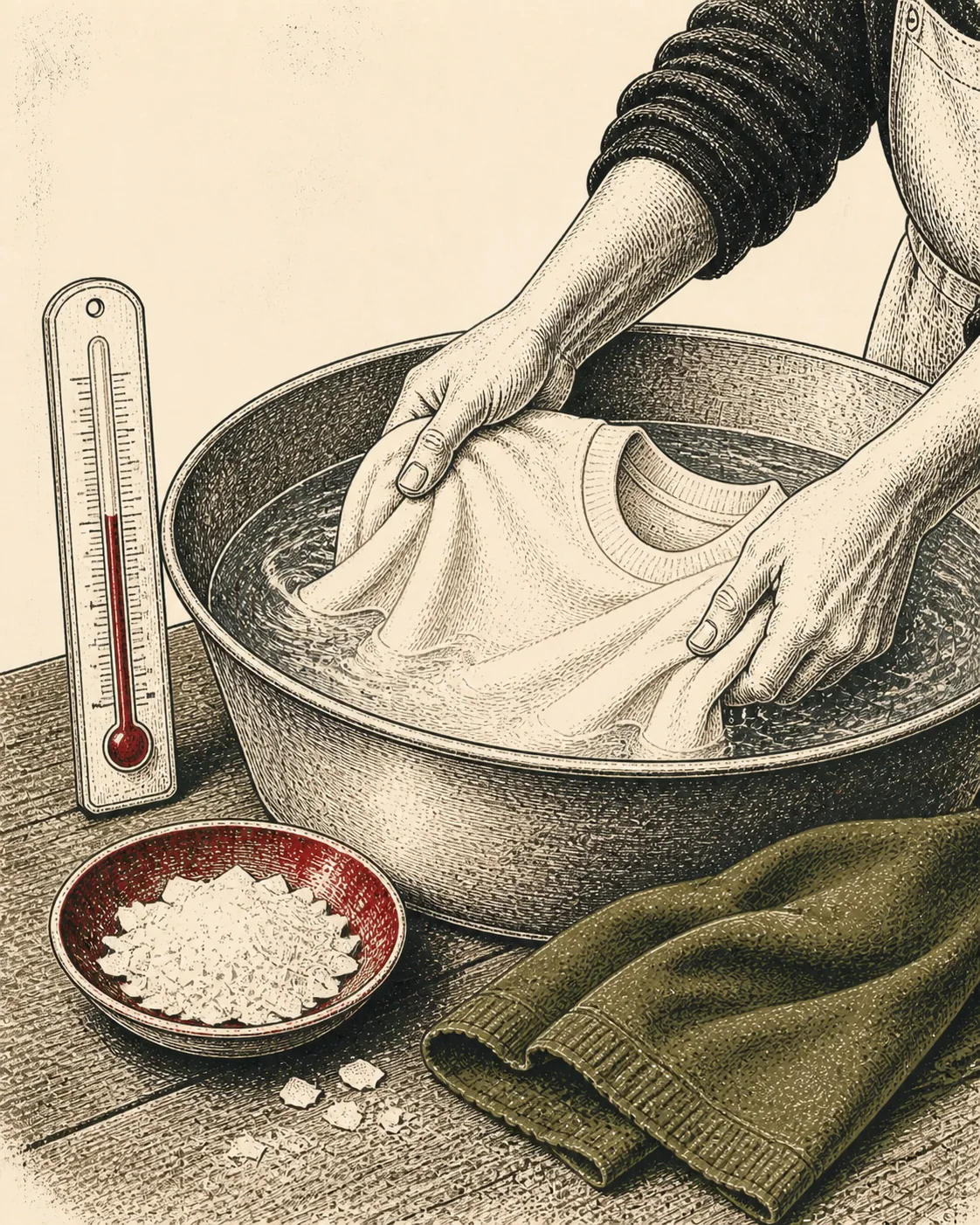
Yes. Cold water gets clothes clean for almost everything in a normal hamper, and it has for about twenty years now, ever since detergent chemists solved the problem that used to make hot water necessary. The dial on your washer still offers hot, warm, and cold as if they were three equally reasonable choices. They are not. For most loads, hot is the one doing the least useful work and the most damage to the electric bill.
Where the energy actually goes
A washing machine’s motor spins a drum. That takes some electricity, but not much. The number that matters is this: heating the water accounts for about 90 percent of the energy a clothes washer uses per cycle, according to the joint Department of Energy and EPA ENERGY STAR program. Everything else, the motor, the pump, the electronics, splits the remaining tenth.
That ratio is why the temperature dial is the single biggest energy decision in the laundry room, bigger than load size, bigger than machine efficiency rating, bigger than spin speed. A cold cycle and a hot cycle move roughly the same amount of water through roughly the same drum for roughly the same number of minutes. The difference is almost entirely a resistance coil or a tankless heater raising that water from tap temperature to somewhere between 90 and 130 degrees Fahrenheit, and that coil is the appliance’s biggest single draw.
The machine itself is a smaller lever, though a real one. ENERGY STAR-certified front-load washers use about half the energy and water of a standard top-load agitator machine, per the same ENERGY STAR product page. That difference comes from tumbling clothes through a shallow pool of water instead of submerging them in a full tub, which needs less water heated in the first place. But halving a number that was already the smaller half of the equation is a modest gain next to skipping the heater altogether. Buy the efficient machine if you’re buying new. Turn the dial to cold either way.
What actually gets stains out
The reason cold water can carry that load without a compromise is enzymes, not heat. Laundry detergent has included protease and amylase enzymes since the 1960s, added specifically to break down protein stains (blood, egg, sweat) and starch stains (sauce, food residue) into fragments small enough to rinse away. For decades those enzymes worked best in warm water, and that dependency is why hot and warm washing became the default habit.
That changed. Formulators went looking for enzymes that stay active at lower temperatures, the same trait that lets some bacteria and fungi thrive in cold soil and glacial meltwater. P&G’s Tide research division, summarizing the underlying enzyme science, cites a 2004 study by Tindbaek and colleagues that engineered a hybrid protease with catalytic activity more than double that of its unmodified parent enzyme at 10 degrees Celsius, close to a cold tap in winter. That is the mechanism, not marketing language: the protein-cutting enzyme itself was bred and mutated for cold performance, the same way a crop variety gets bred for drought.
Protease is only one of the enzymes doing this work. The same Tide research summary cites a 2010 study by Hasan and colleagues on cold-tolerant lipases, the enzymes that break down fats and oils, and more recent research (Yau and colleagues, 2024) on cellulase enzymes that trim the tiny loose fibrils on a cotton fiber’s surface, which is part of how a cold wash keeps fabric from graying and pilling over repeated cycles. A modern liquid or powder detergent runs a small stack of enzymes, each tuned to a class of soil and each selected, over multiple product generations, for staying active well below the temperature that used to be considered necessary.
The American Cleaning Institute, the trade association for detergent makers, runs an outreach program built entirely around this shift, called Cold Water Saves. Its existence is itself evidence: an industry does not spend money telling customers to buy less of its hot-water-dependent product unless the chemistry underneath the claim actually holds.
Where hot water still wins
None of this means the hot setting is obsolete. Heat still does two things cold water cannot: it disinfects more reliably, and it dissolves and lifts oil-based soil better than any enzyme can. That makes hot water the right call for laundry from a household member who is sick, for cloth diapers, for kitchen towels loaded with grease, and for any garment whose care label specifically calls for it. Read the label; it is there because someone tested the fabric, not because the manufacturer is being cautious.
A grease-heavy stain on a driveway rag is a different problem than sweat on a cotton tee, and no enzyme system fully closes that gap. The honest case for cold water is narrower than “always,” and it is exactly as wide as “almost everything you actually wear.”
Illness is worth separating out on its own, because it is the case people get wrong most often. A cold enzyme wash is built to remove soil, not to sterilize fabric. If someone in the house has a stomach bug, strep, or a similar contagious illness, wash their sheets and towels hot and dry them on high heat, since heat is still the more reliable way to knock down the organisms involved. That is a health decision, not a cleaning-performance one, and it stands regardless of how good the detergent’s enzymes are at cold temperatures.
The shrinkage argument nobody heats their water for
There is a second reason to default cold that has nothing to do with the electric bill. Cotton shrinks from a combination of heat and mechanical agitation working together, and a washing machine on hot supplies both at once. Keeping the wash cold removes half of that equation before the fabric ever reaches a dryer. It will not stop shrinkage entirely, since a hot dryer can still do the damage on its own, but it removes one full pass of heat exposure from a garment’s life, which matters more on heavier cotton that holds its shape precisely because the yarn hasn’t been cooked and tumbled into something looser.
Our tees carry care instructions that specify a cold wash and a hang dry, for exactly this reason: a heavyweight cotton tee holds its boxy drape longer when it only meets heat once, in the dryer, and preferably not even then.
The next time the dial asks a question it already answered years ago, the honest response is the one that costs less to run and costs the shirt nothing at all.