Most gift lists for “the union person in your life” are a T-shirt with a fist on it and a call it a day. That undersells the person you’re shopping for. Somebody who spends unpaid hours reading grievance procedures, sitting on a bargaining committee, or standing at a strike gate in February does not need a slogan; they already own the slogan, on a picket sign, in a chant, on the back of a hoodie somebody printed for free. What that person is usually short on is time to read the parts of labor history their own local skipped, a place to put fifty dollars that will still exist next year, and one piece of clothing that does not ask them to explain the joke to a coworker who wandered by the break room.
This list has five things on it, most of them not ours. Every non-DRESS item below was checked today against the source that makes the claim true: the publisher’s own record for a book, the fund’s own page for a donation, the magazine’s own subscription page for a price. Nothing here was written from memory, and one category that belonged on this list got cut entirely when it could not be verified. That cut is explained below instead of simply left out.
A subscription that keeps arriving after the holidays
A gift that shows up once loses its shine by February. A subscription keeps showing up, which matters more for this particular recipient than for most, because organizing work runs on information that goes stale fast: who’s up for reelection on the executive board, which local just won a first contract, which employer is running the same union-busting consultant three other shops have already named. Labor Notes has been reporting on rank-and-file organizing since 1979, and an individual annual subscription runs $30 as of this writing, according to the organization’s own subscription page, with supporting and institutional tiers priced higher and bundle rates available for a local that wants five or more copies landing on a break-room table each month. That gets a print and digital magazine covering contract fights, organizing drives, and the kind of shop-floor detail that national news skips because it isn’t a strike yet. Prices for anything move, so check the current figure before you buy; this one was confirmed the day this post went up, and the piece says so rather than quoting last year’s rate as if it still holds.
Fight Like Hell, by Kim Kelly
Kim Kelly’s Fight Like Hell: The Untold History of American Labor came out from Atria Books in 2022. Most single-volume labor histories run through the same handful of strikes: Homestead, the Triangle fire, the Flint sit-down. Kelly’s book keeps those but spends its real weight on the workers standard accounts leave at the margins: incarcerated laborers, sex workers, domestic workers, and the farmworkers of color whose organizing gets folded into a single name when it was never one movement. Kelly came to labor writing as a beat reporter, not a historian by training, and it shows in the pacing: chapters read like features, built around a person and a workplace rather than a decade and a policy. For a reader who already owns a general labor history, this is more likely to be the gap on the shelf than a repeat.
There Is Power in a Union, by Philip Dray
Philip Dray’s There Is Power in a Union: The Epic Story of Labor in America came out from Doubleday in 2010 and does the opposite job: the long, chronological version, from the Philadelphia cordwainers’ conspiracy trial of 1806, the first labor case tried in an American court, through two centuries of strikes, laws, and reversals, in a single readable narrative. It is the book to hand someone who wants the whole shape of the story before they go looking for the parts Kelly’s book fills in, or who keeps losing arguments with a relative about whether unions are a recent invention and wants the eighteenth-century start date on hand. Put next to each other, the two books cover ground neither covers alone: Dray gives the spine, and Kelly gives the chapters most spines never grew, a pairing that beats picking a single “best” book and hoping it does everything.
A donation that outlasts the news cycle
Strike funds are real and worth supporting, but most are tied to one contract fight and close, correctly, once it settles. That makes them a poor match for a gift bought weeks or months ahead of when it’s needed: search for a specific 2024 strike fund today and there is a real chance the page is archived, the drive is over, and the money has already been distributed and the account closed. A gift made in someone’s name works better against a fund built to last past any one contract. The Entertainment Community Fund, known for most of its history as the Actors Fund, was founded in 1882 and is still operating according to its own site as of this writing: emergency financial assistance, affordable housing, health insurance counseling, and career support for entertainment and performing arts workers, union and non-union alike, funded in part through gifts made in a member’s honor and options that range from a one-time donation to a planned or stock gift. It is not a strike fund specifically, and this piece will not call it one; calling a hardship fund a strike fund because the recipient works in a union shop would be exactly the kind of blurred labor claim this brand tries not to make. What it is instead is a standing fund with a public donate page, open the whole year regardless of which contract is up for renewal, which is the harder thing to find and, for a gift, the more useful thing to give.
The tool brand we could not put on this list
The original plan for this piece called for a union-made tool brand, the kind of gift that argues for itself: pliers a person keeps for thirty years, made by someone whose job is also protected by a contract. We checked two well-known American tool manufacturers’ own sites for a stated union affiliation, one of them a company whose site repeats “Made in the USA” on nearly every page. Neither one named a union, a local, or a collective bargaining relationship anywhere in its own company information, and neither turned up a union’s own page naming that manufacturer’s shop floor either. That does not prove the workers who make either brand’s tools are non-union; American manufacturing history is full of union shops that never put the fact on their marketing copy, because for decades it wasn’t a selling point the way it can be now. It means the claim was not sitting on the page where a customer, or we, could verify it today, and a claim we can’t verify today is a claim we can’t put in front of you. A wrong union claim does more damage to a reader’s trust than one missing item does to a gift list, so this one runs shorter than planned instead of guessing at a fifth category.
The one thing we make
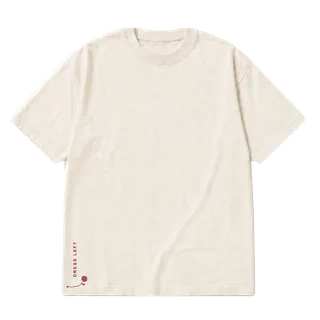
DRESS ← makes one shirt worth naming here: the Direction Tee, 6.1 oz cotton jersey, union made in the United States, $38. It carries a small vertical mark at the lower-left hem instead of a chest graphic, so it reads as a plain heavyweight tee from across a room and rewards a closer look up close, the kind of shirt that works at a bargaining session and at a bar afterward without changing clothes in between. No campaign copy attached. The rest of this list works fine without it, which is the point of putting only one of our own products on a list of five.
A good gift for a union member does the same thing a good union contract does: it names the specific thing it is offering instead of gesturing at a cause. A magazine subscription says what arrives and how often. A book says whose history it tells and whose it leaves out. A fund says who it helps and how the money moves, and whether that help is still there next contract cycle or only this one. Buy the thing that says exactly what it is, and check, the way this list did, that it still says the truth today.