Start with what a cap is: cotton twill panels sewn over a shaped crown, a stiffened brim, and a sweatband whose whole job is to absorb what your forehead produces. Two of those three things are structural and hate water in bulk. One of them is a sponge you wear. Cap care is just treating each part as what it is.
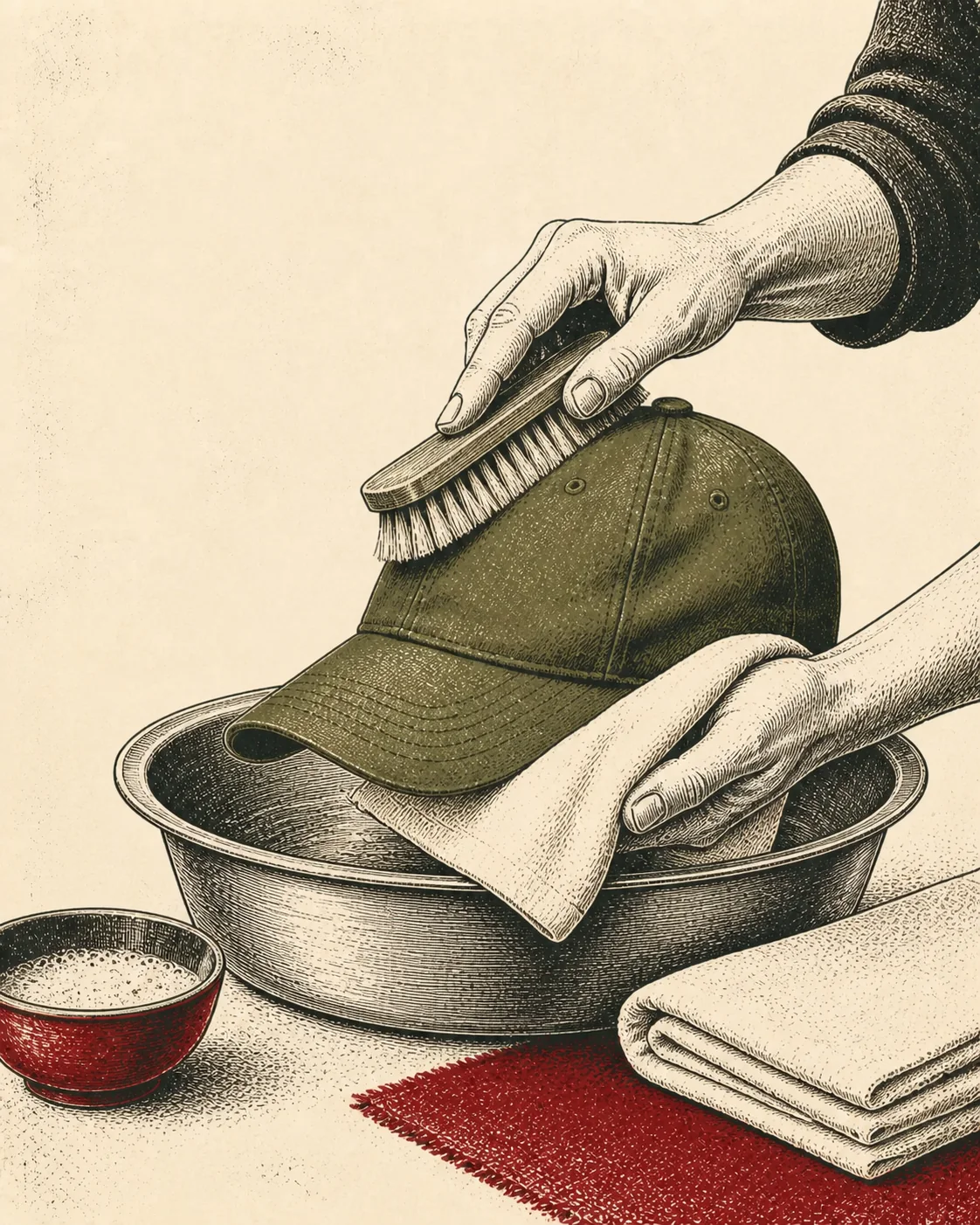
The routine clean. Cold water, a drop of mild soap (dish soap or gentle detergent), and a soft brush; an old toothbrush is the traditional tool. Dampen, work the suds in light circles over dirty areas, wipe with a clean damp cloth. That handles dust, ring grime, and most of what a summer does. Total time, five minutes.
The sweatband. This is where caps are won and lost. Turn the cap inside-out at the band, wet just the band, and work soap along it with the brush from the inside face, then rinse only that region under a shallow trickle. The crown never needs to be saturated for the band to come clean. Do this before stains oxidize yellow; protein stains that have baked in the sun soften only with patience and repeat treatments, and never with heat.
What never to do. The washing machine deforms the crown and can buckle the brim; its whole mechanism is agitation, which is the one force a shaped object can’t take. The dishwasher trick, a piece of folk advice that refuses to die, combines harsh detergent with exactly the heat that sets sweat stains permanently. And a dryer combines everything wrong at once. If a cap has been through a flood, hand-soak it briefly in cold water, reshape, and accept it as the exception that proves the rule.
Drying. Blot with a towel, open the cap to its shape, and rest it on something head-shaped: a coffee can, a bowl, a rolled towel inside the crown. Air dry away from direct sun, which fades dye unevenly. A cap dried on its brim dries with a wave in it.
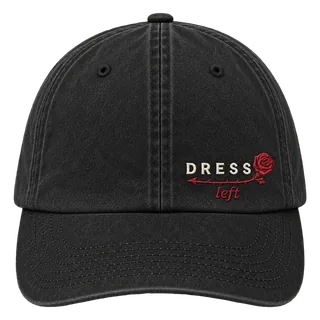
One note on the embroidery. Thread is the most durable element on the cap and takes this entire routine without complaint, which is part of why the rose is stitched instead of printed. The twill will fray at the brim edge and the sweatband will go darker at the front long before the stitching shows any wear at all.