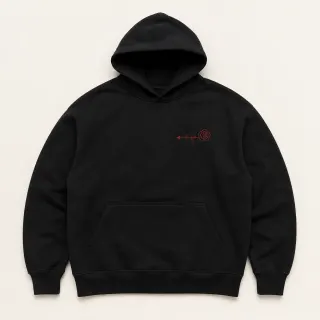
Most fabric is dyed as fabric: giant rolls colored at the mill, then cut and sewn into shirts. Garment dyeing flips the order. The shirt gets sewn first, in raw undyed cotton, and then the whole finished garment goes into the dye bath. The result is color that soaks every seam and stitch, a hand that feels washed-in from day one, and most of the shrink taken out before you ever wear it.
It also means the shirt has a relationship with water, and the first few washes set the terms.
Wash one: cold, inside out, by itself or with towels in the same color family. Garment-dyed cotton can release a little loose surface dye the first time; give it somewhere harmless to go.
Every wash after: cold water, inside out, with like colors, ordinary detergent. Inside out is doing two jobs, protecting the print face from abrasion against the rest of the load and letting the fabric surface tumble against itself less.
Drying: the clothesline is the whole secret. Heat is the enemy of both cotton and ink; a hot dryer shrinks the knit, sets hard creases, and is the single most common reason a chest print cracks early. Hang a heavyweight tee by the hem, not the shoulders, and it dries flat with its shape intact. If a dryer is the only option, low heat, and take it out slightly damp.
What not to do: bleach, obviously. Fabric softener, less obviously; it coats the fibers and dulls the dyed surface. And ironing directly over a print, which does in one pass what fifty hot dryer cycles would.
About the fade: a garment-dyed shirt eases back a shade over its first month of laundry, then settles and holds for years. This is the finish arriving, not leaving. The color a garment-dyed tee wears at wash ten is the color it was designed to be, the way a pair of raw jeans is designed for its second year. If you want a shirt that looks identical forever, that technology exists; it’s called polyester, and you don’t want it.