Paul Robert Cohen walked through the corridor of the Los Angeles County Courthouse in April 1968 wearing a jacket that read “Fuck the Draft.” A police officer arrested him for disturbing the peace. Three years and one Supreme Court ruling later, the word on his jacket was constitutional law: California could not punish him for it. Cohen v. California, 403 U.S. 15 (1971), is still the case most people cite, correctly, when they say clothing is speech. What they usually get wrong is how narrow and how conditional that protection is.
What Cohen v. California actually held
Justice Harlan wrote for the majority that Cohen’s conviction rested “solely upon ‘speech,’” not on any conduct beyond the wearing of the jacket itself, which put the case squarely inside the First Amendment rather than outside it. The state’s only real justification was that the word offended people who saw it, and Harlan rejected that as a governing principle: allow the state to ban words because they’re indecorous, he wrote, and there is no stopping point, since “one man’s vulgarity is another’s lyric.” The Court also noted that the word carried more than a literal message. It conveyed “not only ideas capable of relatively precise, detached explication, but otherwise inexpressible emotions as well,” and the emotive charge is part of what the First Amendment protects, not an embarrassing surplus to be edited out.
Harlan was careful to say what the case did not decide. The word carried no erotic content, so obscenity law never entered into it. Nor was it “fighting words,” since it was not “directed to the person of the hearer” in a way likely to provoke a violent reaction. And the courthouse visitors who saw it were not a captive audience: anyone offended, Harlan wrote, could avoid it “simply by averting their eyes.” Each of those three carve-outs is a door the state could have walked through and didn’t. A shirt that is legally obscene, a slogan shouted as a direct provocation at a specific person, or a message forced on a genuinely captive audience sits outside what Cohen protects. Almost every graphic tee sold to walk down a public street clears all three, which is exactly why the case still does the work it does.
What Tinker v. Des Moines added
Cohen was an adult in a public corridor. Tinker v. Des Moines, 393 U.S. 503 (1969), asked the harder question of a minor on public school property. In December 1965, Mary Beth Tinker, her brother John, and Christopher Eckhardt wore black armbands to their Des Moines schools to mourn the dead of the Vietnam War and support a truce. The district suspended them. The Supreme Court, in an opinion by Justice Fortas, reversed and held the armbands were protected symbolic expression, “closely akin to ‘pure speech.’”
Fortas’s test is the one still taught in every school law class: officials may not restrict student expression merely because they want to avoid “the discomfort and unpleasantness that always accompany an unpopular viewpoint.” Restriction requires the school to show its action was caused by something that would “materially and substantially interfere with the requirements of appropriate discipline in the operation of the school,” not a hunch or a preference for calm. The Court was equally clear about the other side of that line: conduct that “materially disrupts classwork or involves substantial disorder or invasion of the rights of others is, of course, not immunized” just because it happens to be expressive. A shirt that incites a fight in the hallway is not protected by the same logic that protects an armband worn in silence. Tinker gives students real rights on public school grounds, and it gives administrators a real, if narrow, tool to enforce order rather than orthodoxy.
Where the First Amendment stops: your employer
Here is the part search results get wrong most often. Cohen and Tinker are both cases about government power: a city ordinance enforced by a city police department, a public school district’s suspension. The First Amendment reads “Congress shall make no law,” and a century and a half of incorporation under the Fourteenth Amendment extended that restraint to state and local government too. It was never written to restrain a private company.
A private employer can send you home for a shirt it doesn’t like. A private store can refuse you service over a slogan on your chest, subject to the narrower anti-discrimination laws that protect race, religion, sex, and a short list of other categories, none of which cover a political message by itself. A privately owned mall is not a public square just because it looks like one, and courts have generally treated it as private property for First Amendment purposes. None of this makes the employer, the store, or the mall wrong to enforce a dress code. It means the Constitution is not the tool available against them. Workplace protections for political shirts, where they exist at all, come from other sources: a specific state statute, a union contract, or federal labor law’s separate and much narrower protection for talking about wages and working conditions among coworkers. That is a different body of law entirely, and it does not turn every private workplace into a free speech zone.
The polling place is its own problem
Voting is government action through and through, which is exactly why the polling place produced its own case. Minnesota barred voters from wearing “political badges, political buttons, or political insignia” at the polls. Andrew Cilek showed up in a Tea Party shirt and a “Please I.D. Me” button and was turned away. In Minnesota Voters Alliance v. Mansky, 585 U.S. 1 (2018), the Supreme Court struck the law down, seven to two, in an opinion by Chief Justice Roberts. The problem wasn’t that Minnesota wanted a calm, pressure-free polling place, which the Court agreed was a legitimate goal. The problem was the word “political” itself: the statute gave election judges no way to tell what counted, and a law “capable of reasoned application” has to give the people enforcing it more to go on than their own judgment of what looks partisan. Roberts wrote that Minnesota had failed to “articulate some sensible basis for distinguishing what may come in from what must stay out,” which is a vagueness problem, not a declaration that polling places must allow any shirt at all.
That distinction matters, because Roberts also said plainly that states retain real power here: “some forms of advocacy should be excluded from the polling place.” A state can write a narrower rule, tied to specific candidates, ballot measures, or a defined buffer around express advocacy, and expect it to survive. States have since rewritten their statutes to try to thread that needle, and they have not landed in the same place. Because those rules are set state by state, and because Mansky is only a few years old as election law goes, the honest answer to “can I wear this shirt to vote” is to check your own state’s current polling-place policy before Election Day rather than trust a rule you read once.
What this leaves for a tee shirt in the closet
Stack the three cases and the shape that emerges is narrower than the popular version of “free speech” but sturdier where it applies. Against the government, in a public street, park, courthouse hallway, or (with Tinker’s disruption test) a public school, a shirt carrying an unpopular, crude, or explicitly political message is about as protected as anything you can wear. Against a private employer, a private landlord, or a private business, the Constitution simply is not the document doing any protecting, and it never claimed to be. Inside a polling place, the rule is neither of those defaults; it is whatever your state has written since 2018, and that is worth five minutes of checking rather than an assumption.
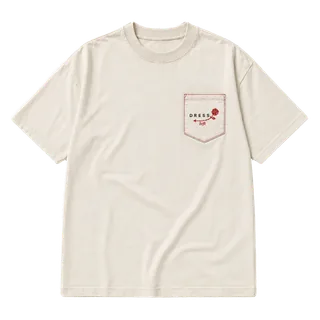
We print union made shirts with a rose and an arrow on the chest because the mark says something we mean, not because we think a courthouse corridor in Los Angeles bought every wearer of every shirt a blanket immunity. It didn’t. It bought something narrower and, if you know where the edges are, more useful: a government that has to have an actual reason, stated plainly, before it can make you take the shirt off.