
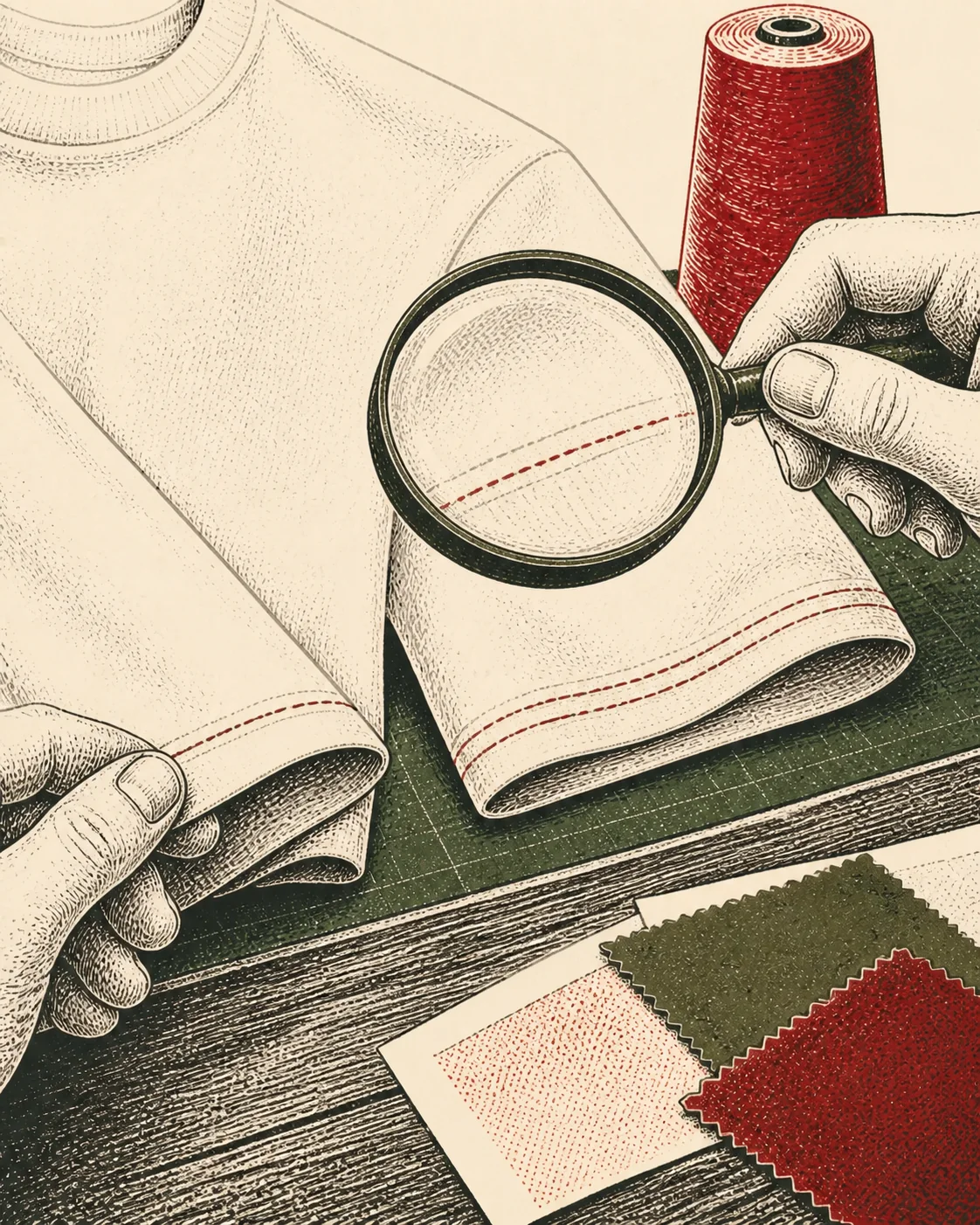
A single stitch t-shirt is one whose hem and sleeve openings were closed with a single line of stitching, run on a single-needle sewing machine, instead of the two parallel rows a twin-needle coverstitch machine leaves. Turn the sleeve cuff inside out and count the rows of visible thread. One row, single stitch. Two rows, double stitch. It sounds like a small detail because it is one, and collectors have built an entire dating system on it anyway.
What changed on the sewing floor
Before high-volume garment factories standardized on automated twin-needle coverstitch machines, hemming a t-shirt meant one operator, one needle, one pass around the hem or sleeve opening. A twin-needle machine sews two parallel rows in that same single pass, which according to Trivantage’s technical comparison of the two setups adds real structural strength: the second row “reduces seam puckering” and improves resistance to the seam pulling apart under tension. For a shirt getting pulled over a head and through a washing machine a few hundred times, that second row matters.
What it costs is time. A single-needle hem asks more of the machine operator per garment than a twin-needle pass that closes the same seam in one motion. Multiply that difference across a production run in the tens of thousands and the twin-needle machine pays for itself fast. Factories switched because the arithmetic favored them, not because anyone decided single-needle hems looked cheap.
The same math applied to more than the bottom hem. Sleeve openings, the neck join, and the shoulder seam all went through the same calculation as coverstitch machines got cheaper and more common through the 1990s: one pass, two rows, less operator time per garment, fewer stations on the line. A t-shirt that reads as single stitch is usually single stitch everywhere a seam shows, sleeves included, because a factory that bought a twin-needle machine for the hem generally bought one for the sleeves too. That’s why the sleeve opening, not just the bottom hem, is where collectors check first: it’s harder to fake and easier to feel with a thumb run along the inside seam.
The 1994 rule, and why it’s looser than it sounds
Ask a vintage seller when factories stopped single-stitching and you’ll get a specific year: 1994. The story attaches it to NAFTA, the trade agreement that took effect that January and reshaped where American brands had shirts sewn. ThriftCon’s rundown of the rule repeats the standard version: shirts before the mid-1990s tend to run single stitch, shirts from the late 1990s on tend to run double.
The tendency is real. The precision isn’t. Double-stitched shirts exist from before 1994, made by manufacturers who had already adopted twin-needle machines for reasons that had nothing to do with a trade agreement three years later. Single-stitched shirts exist after 1994 too, from smaller runs, smaller manufacturers, and factories that hadn’t yet replaced their equipment. A single needle machine doesn’t care what year a treaty was signed. It only cares what a factory bought and when. NAFTA likely accelerated a shift that was already under way as coverstitch equipment got cheaper and more common through the decade, which is a less satisfying story than a hard cutoff but a truer one.
Treat single stitch the way a good appraiser treats any single clue: it narrows the range, it doesn’t settle the argument. A tag, a print method, a fabric weight, and a brand’s own manufacturing history do more work together than a stitch count does alone.
How the folklore gets repeated
The NAFTA version of the story is convenient because it gives the rule a hard edge, a signed date instead of a fuzzy decade, and hard edges sell better on a resale listing than honest ranges do. A representative statement of the claim, from a vintage retailer’s own guide to the two stitch types:
“NAFTA reduced tariffs, enabling corporations to relocate factories globally seeking cheaper labor” as one of the forces “implemented around 1994” behind the shift to double stitching.
That is a real trade agreement cited for a real reason, and it is also doing more work in that sentence than a single treaty can do on its own. NAFTA changed where shirts got sewn. It didn’t hand every remaining factory a coverstitch machine on New Year’s Day. The equipment purchase and the trade agreement happened in the same rough window, close enough that a seller can point at both and sound precise, loose enough that a garment historian would ask for the factory record before signing off on a year.
What the stitch doesn’t tell you
The other half of the collector story is that single stitch shirts are sturdier, and that claim needs a caveat. Whether a hem resists unraveling once the thread is cut depends on the specific stitch formation the machine uses. A chain-type stitch loops back through itself and can run if you pull the wrong end; a lockstitch interlocks two separate threads and holds tighter. That’s a difference in stitch formation, not simply a difference in needle count, and a two-needle coverstitch machine is still running a chain-based stitch underneath those two visible rows. A shirt is not automatically more durable because it has one row of thread instead of two. It’s older, on average, and older cotton has usually already gone through the one significant round of shrinkage a shirt undergoes and settled into whatever hand it’s going to have. That’s what collectors are often actually responding to: a shirt that’s been washed soft for thirty years, with a stitch count that happens to correlate with the era that produced it.
Reading a hem honestly
None of this makes the single stitch rule useless. It’s a fast, physical test that takes five seconds and needs no tag, no wash care label, no brand research: flip the cuff, count the rows. It just deserves the same treatment any dating method deserves, which is a stated margin of error instead of a confident year. A single stitch hem on an unmarked shirt says probably before the coverstitch machines took over the production floor, likely sometime before the late 1990s, not manufactured in this specific year. Anyone selling more certainty than that is selling the shirt, not the history.
Pair the stitch count with everything else the shirt is willing to show. A tag style, a union label, a size chart’s format, a brand’s own record of when it changed manufacturers all narrow the window further than a hem ever will alone. The single stitch is a first read, the kind you take standing in a thrift store with thirty seconds and no reference book. Treat it as an opening question rather than a verdict, and the shirt in your hands tells you more, not less.