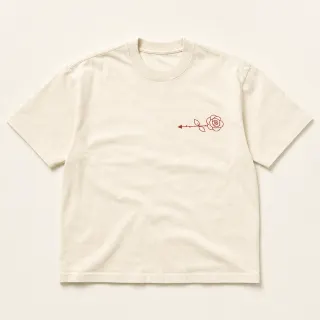
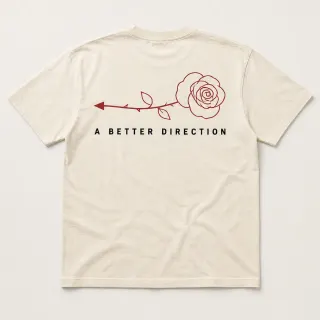
There is a rose on your chest, and it has a payroll history.
Start with the words, because the words came first. In September 1910, the American Magazine printed an essay by Helen Todd, a factory inspector campaigning for women’s suffrage. She quoted a young woman’s summary of what the vote was for: bread for everyone, “and roses too.” A year later James Oppenheim turned the phrase into a poem. “Hearts starve as well as bodies,” it runs; “give us bread, but give us roses.”
Then came the strike that fused the phrase to the labor movement for good. In January 1912, textile workers in Lawrence, Massachusetts walked out after mill owners cut pay in response to a state law shortening the work week. Tens of thousands of workers, immigrants from dozens of countries, held out through a New England winter and won. Popular memory says strikers carried a banner reading “We want bread, and roses too.” Historians have never found a photograph of that banner, and the attachment may be retrospective. It doesn’t much matter. The strike was the argument the phrase had been looking for, and they have traveled together ever since.
The flower itself became a logo more than half a century later, and it happened in Paris. Around 1969, as the French left reorganized itself into what would become the Parti Socialiste, a graphic mark appeared: a clenched fist holding a red rose. The fist was the old iconography of struggle. The rose softened it into an offer. The party formally took it up in the early 1970s, and the design spread outward through the Socialist International, whose own emblem remains a fist and rose held together.
Britain made the rose respectable dinner-table politics. In 1986 the Labour Party, rebuilding after years in the wilderness, retired the red flag from its branding and replaced it with a single red rose. Commentators sneered at the marketing; the rose outlasted the commentators. Germany’s SPD carries the flower. So do sister parties from Scandinavia to Latin America. By the 2010s the rose had gone digital, a bare emoji in a username doing the work a lapel pin used to do.
Why did this symbol survive when so much political iconography curdled into costume? Because the rose makes a claim rather than a threat. Hammers and sickles describe labor; the rose describes what labor is for. It says the eight-hour day was never the end goal, only the means: the point was what you could do with the other sixteen. Nobody has to explain a flower. That’s the whole trick.
Our version pulls the stem out into an arrow and points it left. It reads as a flower first, which is exactly the order we want: a good shirt that turns out to mean something, never a slogan that turns out to be a shirt.