On the night of November 22, 1909, a crowd filled the Great Hall at Cooper Union in Manhattan past its capacity, spilling into two overflow halls nearby. They were shirtwaist makers, mostly teenagers and young women, mostly Jewish and Italian immigrants, and they had come to decide whether to strike. For two hours they listened to male union officials from the American Federation of Labor and the International Ladies’ Garment Workers’ Union counsel patience. Then a twenty-three-year-old sewing machine operator named Clara Lemlich walked down the aisle and asked for the floor.
She had been on the picket line since the Triangle strike began that September and had already had several ribs broken by strikebreakers hired to attack the pickets. She did not want another speech. Reporter Rheta Childe Dorr, who was in the hall and recorded the meeting for her 1910 book What Eight Million Women Want, documented what Lemlich said:
I have listened to all the speakers, and I have no further patience for talk. I am a working girl, one of those striking against intolerable conditions. I am tired of listening to speakers who talk in generalities. What we are here for is to decide whether or not to strike. I offer a resolution that a general strike be declared now.
The hall did not vote by show of hands. It took an oath, in Yiddish, the chairman leading and thousands of voices repeating it back: if the hand now raised in pledge turned traitor to the cause, may it wither from the arm. It was an old formula, a version of an ancient Jewish oath of fidelity, put to a new purpose in a room full of garment workers. Within two days, factories across the shirtwaist trade emptied out.
How many people actually struck
The strike took its name from a round number, and the round number does not survive close inspection. Roughly 15,000 workers walked out in the first two days. By the strike’s peak, contemporary estimates ran from 20,000 to 30,000, drawn from a trade that employed something like 32,000 to 40,000 shirtwaist workers across New York City at the time. Nobody was taking a headcount at the factory gates during a strike that spread shop by shop over a period of weeks, and the manufacturers had every reason to undercount pickets while union organizers had every reason to round up. Twenty thousand became the name because it was the figure that stuck in the press, not because anyone verified it. Historians since have treated it as an order of magnitude, not a census.
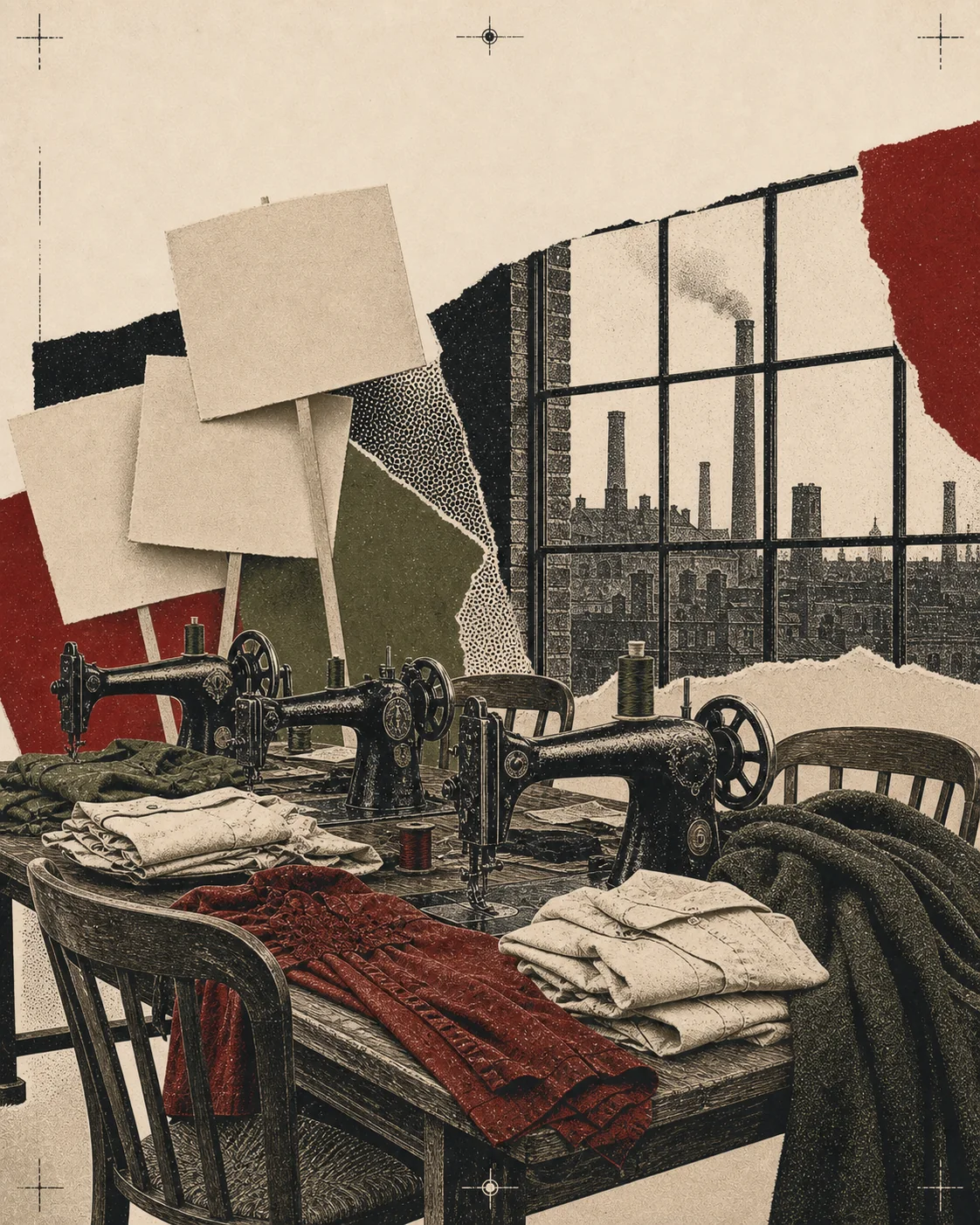
What is not in dispute is who these workers were: overwhelmingly young, overwhelmingly women, many of them recent arrivals who had been in the country a matter of months, working in shops where a fifty-nine-hour week for four or five dollars was ordinary. Shirtwaists, the blouses that gave the era its fashionable silhouette, were made by hand-fed sewing machines in crowded lofts, often on the upper floors of buildings with one usable exit.
Clara Lemlich herself was part of that pattern. She had come to New York from Ukraine as a teenager, found work at a shirtwaist shop, and by 1909 was already an executive board member of Local 25 of the International Ladies’ Garment Workers’ Union, one of the few women in a leadership position the union’s male officers had not chosen for her. Workers at the Triangle Shirtwaist Company itself had already been on strike since that September, two months before Cooper Union, over the same wages and hours that would soon pull in the rest of the trade. The November meeting was called to decide whether the rest of the city would join them. It was not built to produce a snap vote that night. Lemlich made it produce one anyway.
A winter on the picket line
The strike ran from late November 1909 into the middle of February 1910, through a New York winter with no strike fund large enough to cover it. Employers hired police officers off duty and paid strikebreakers to work the picket lines; women were arrested by the hundreds on charges as thin as blocking a sidewalk, then fined or sent to a workhouse. Wealthy allies, organized through the Women’s Trade Union League, posted bail, staffed relief kitchens, and in a detail the newspapers loved, sometimes rode along in fur coats to watch their own arrests get publicized. The coverage that resulted did something a union leaflet could not: it put a strike of teenage garment workers on the same page as society names, and made the strike harder for the city to ignore.
By February, the manufacturers’ association, the Associated Waist and Dress Manufacturers, negotiated what came to be called a protocol: 339 of its 353 member firms signed contracts granting a fifty-two-hour week, at least four paid holidays a year, equal distribution of work in slow seasons, and a promise not to discriminate against workers for union membership. It did not deliver a closed shop, and it did not bind every employer in the trade. Fourteen firms refused to sign at all.
The company that refused
Among the holdouts was the Triangle Shirtwaist Company, on the ninth and tenth floors of the Asch Building near Washington Square, one of the largest shirtwaist manufacturers in the city. Its owners, Max Blanck and Isaac Harris, eventually raised wages to stay competitive for labor, but they would not recognize the union, and they would not act on the safety demands strikers had specifically raised: doors to the stairwells kept locked during working hours, and a single fire escape inadequate for the number of workers on the floor above it. Those had been named, in 1909, as conditions strikers wanted fixed. They were not.
Sixteen months after the Cooper Union meeting, on March 25, 1911, a fire broke out on the eighth floor of the Asch Building and reached the ninth and tenth within minutes. The stairwell door to Greene Street was locked. The fire escape collapsed under weight. One hundred and forty six people died, most of them young immigrant women, in the same trade, some in the same buildings, as the strike that had asked, and failed, to get those doors unlocked.
What DRESS ← takes from it
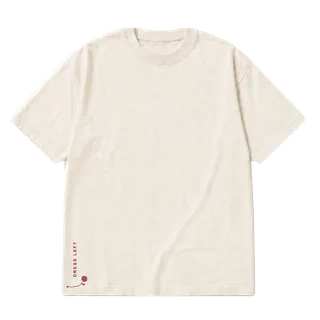
We put a rose in our arrow because a labor history this specific deserves more than a slogan on a shirt. Every DRESS garment is union made in the United States, cut, sewn, and finished by organized labor, which is a fact about a supply chain rather than a tribute to one. Clara Lemlich was twenty three when she ended the debate at Cooper Union with a single sentence, in a hall that had spent two hours listening to men take their time.