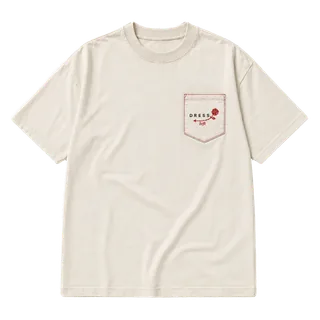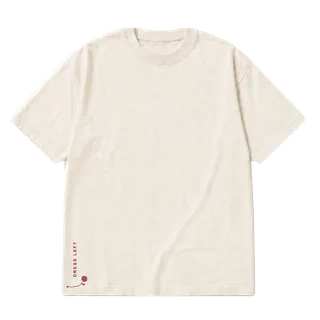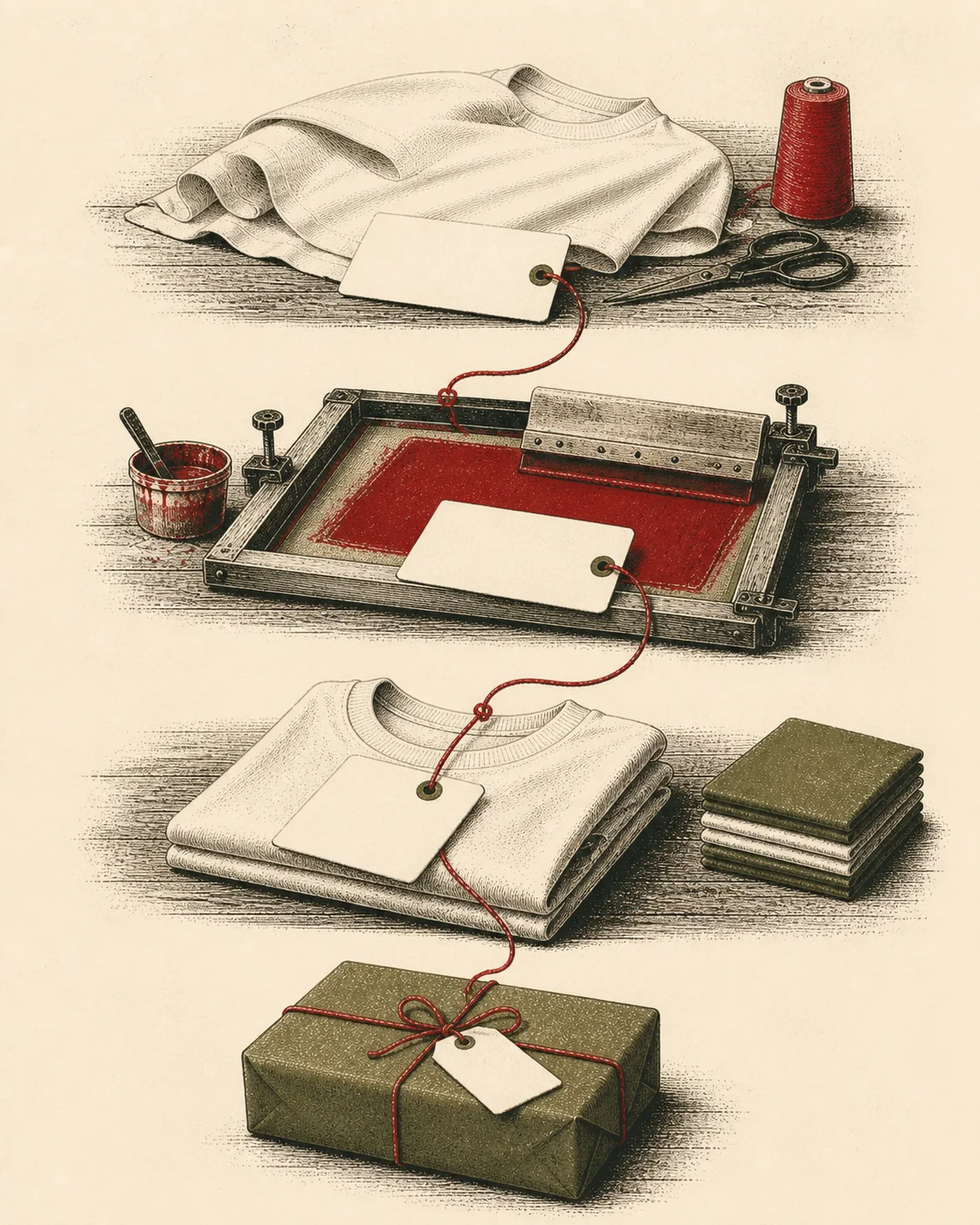
Made to order means the shirt did not exist five minutes before you bought it. No warehouse shelf held your size in your color, waiting for a guess to pay off. Your order is what starts the garment existing at all. Below is the sequence from the moment you click buy to the moment a truck hands it to you, including the parts where nothing visible is happening.
The order that starts everything
Checkout runs through Stripe. The cart gets re-priced against the live catalog rather than trusting whatever numbers your browser sent, so a $38 tee charges $38 regardless of what got fiddled with client side. Shipping is calculated the same way: free on orders of $75 or more, a flat $5.95 under that. Right now checkout only ships to US addresses, APO and FPO included.
A discount code, if you have one, gets checked against Stripe at this same step rather than trusted from the cart page, and a code that no longer qualifies (expired, below its minimum spend, already used on a first order) is rejected before you ever reach a payment screen, so the price you see at checkout is the price that actually charges.
The moment Stripe confirms the charge, an order-confirmation email goes out. That happens within seconds of payment, driven by the same webhook event that tells the production side an order exists. The email lists exactly what you bought, the colorway and size of each line, what it cost, and an order reference pulled from the Stripe session id, no vaguer than a receipt handed to you in a store. At this point the garment is still entirely theoretical. Nothing has been cut. What exists is a paid order, a size, a color, and a timestamp.
The three to five days where the shirt gets built
This is the stage that a warehouse brand skips, because a warehouse brand already guessed your size and color months earlier and boxed it before you ever visited the site. A made-to-order shirt has no such head start. The build window stated on the DRESS shipping page is 3 to 5 business days, and that is the honest span it takes to cut, sew and finish one specific garment rather than the time it takes to walk to a shelf.
The garment is union made in the United States: cut, sewn and finished by people working under a collective bargaining agreement, which is a distinct claim from “union printed.” Union printed means a union shop ran the decoration and the blank underneath could have come from anywhere. Union made covers the whole garment, and DRESS states this specifically because the two get blurred constantly by brands that want the credibility of the first phrase while only doing the second.
Nothing about this stage is visible to you as the customer. There is no tracking number yet, because there is nothing to track. If you have ordered from a brand that shows a progress bar crawling through “processing,” “in production,” and “quality check” during this window, that is a UI choice, not a fact DRESS states about its own line; what is stated is the day range, not a blow-by-blow of the shop floor.
What leaves the building
Once the garment is finished, it ships tracked. The tracking email goes out the moment the package actually leaves, not when it’s queued to leave, which is the difference between a notification you can trust and one you learn to ignore. From that point the package is in the hands of a carrier for 2 to 5 business days, the transit window stated alongside the build window on the shipping page. Add the two ranges together and a DRESS order runs 5 to 10 business days from payment to your door, with the wide end representing a slow build meeting a slow carrier route and the narrow end representing neither.
There is no expedited option that skips the build days, because the build days are not padding. A brand can promise next-day delivery on a shirt that was already sitting in a distribution center. It cannot promise next-day delivery on a shirt that has not been cut yet, not honestly.
The email that arrives two weeks later
One more thing happens after delivery, and it is worth naming because it shows the timeline was actually thought through rather than picked at random. Sixteen days after your order, a single review-request email goes out, no follow-up series. That number is not arbitrary: it is built from the 3 to 5 day production window, the 2 to 5 day transit window, and roughly a week of the garment actually being worn before anyone gets asked what they think of it. Ask on day two and you are asking about a shirt someone has washed once. Ask on day sixteen and you are asking about a shirt that has been through a laundry cycle or two and a few real days on a real body.
If something is wrong when it arrives
The return window is 30 days from delivery. If the garment is lost in transit, the wrong item shows up, or the print is misprinted, the shipping page directs you to write to support with the order reference, and the fix is a replacement or a refund, your choice. That policy sits underneath the whole timeline above: a made-to-order garment can still arrive wrong, the same way any garment can, and the remedy does not depend on whether the shirt came from a warehouse or a cutting table.
What this rules out
A made-to-order system cannot promise same-day shipping, and it should not try to. What it removes instead is the thing that makes same-day shipping possible for everyone else: a warehouse stocked months in advance against a demand forecast, sized and colored before a single customer asked for anything. The 3 to 5 day build window is the time between an order existing and a garment existing to fill it, stated on the shipping page and not adjusted for the season.
The Logo Tee, the Direction Tee and the Rose Hoodie all run through this same sequence: order, build, ship, wear. None of them sit finished in a box before somebody asks for one.