
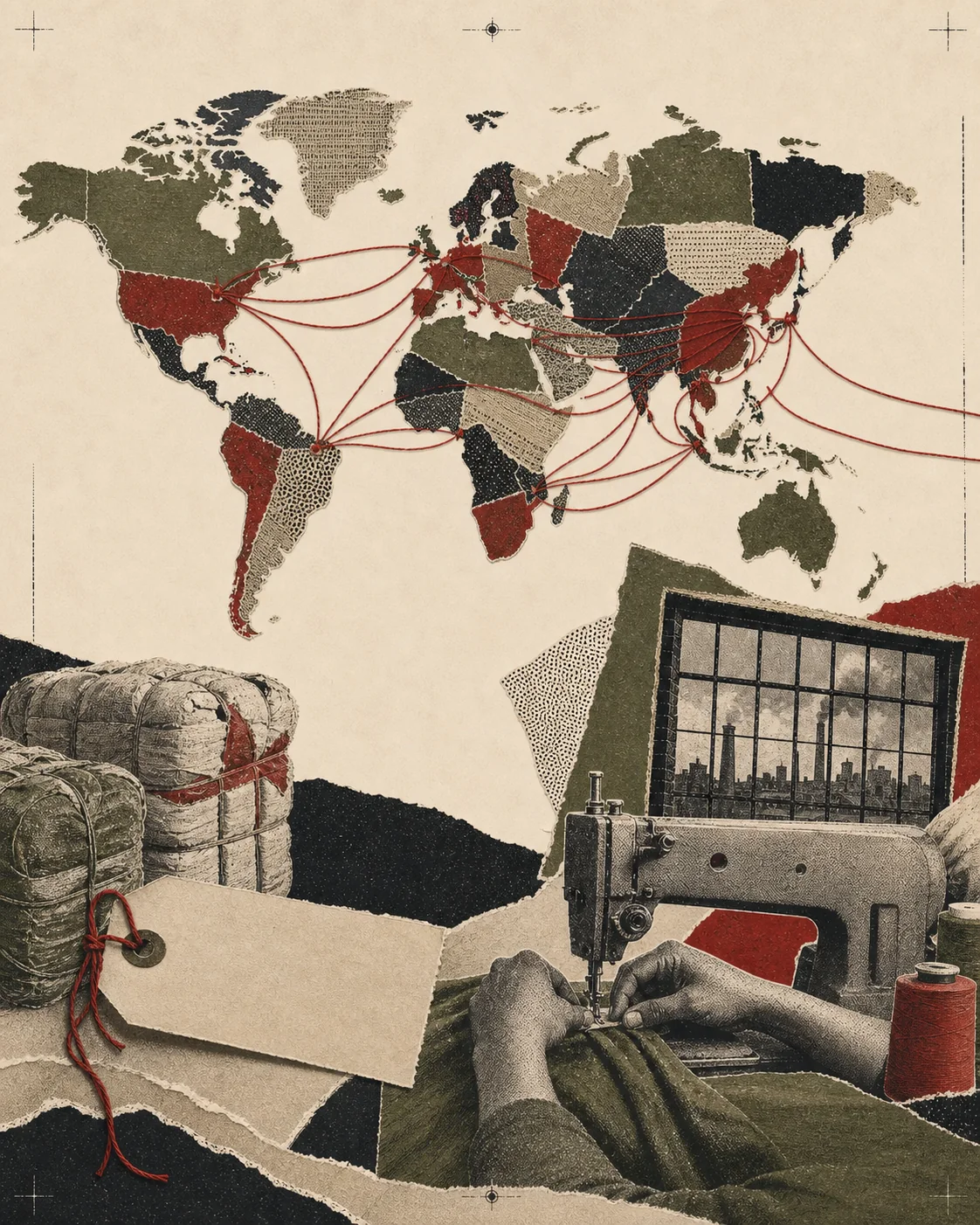
Most of the people who make the world’s clothes are women, most of them work in Asia, and most of them are paid a legal minimum that living-wage researchers say falls well short of what their families need. Each part of that sentence has a number behind it, and the numbers are worth more than the sentence.
The scale, measured one program at a time
No single registry counts every garment worker on earth. Factories move, subcontract, and go undocumented, and a true global census does not exist. What exists instead is Better Work, a joint programme of the International Labour Organization and the International Finance Corporation that has operated since it began in Cambodia roughly twenty years ago. Its current reach: 3.7 million workers, across 2,250 factories, in 11 countries on three continents, working with 48 major clothing brands and retailers. That is not the whole industry. It is the largest slice of it that any single body tracks in detail, factory by factory, and it is concentrated in the countries you would expect: Bangladesh, Cambodia, Vietnam, Indonesia, Pakistan, and several others across Asia and beyond.
The concentration is not an accident of geography. It follows decades of brands moving production toward the lowest labor cost that could still meet a delivery date, a pattern documented since the 1970s and still visible in where Better Work’s country offices sit today.
Who is doing the work
Inside the factories Better Work tracks, close to eight in ten workers are women, and most of them are under 30. The programme’s own reporting on gender equality and inclusion states this plainly, without needing a global survey to back it up: garment work, more than most manufacturing, is women’s work, and has been since the industry took its current shape. That fact shapes everything downstream of it. Maternity leave, harassment reporting, and wage-gap figures are not side issues in garment labor policy; they are most of the policy, because most of the workforce is women navigating them.
Better Work’s own metrics on its participating factories put numbers on some of that downstream effect: a measured reduction in the gender pay gap of up to 17 percent, a 26 percent increase in access to prenatal care, and an 18 percent drop in reported sexual harassment concerns, all attributed to factories enrolled in the programme compared to where they started. Those are programme-reported figures, not independent audits, and they describe factories that opted into oversight, which is itself a form of selection. They are worth stating for what they are: evidence that the floor moves when someone is watching it, not proof of what happens where no one is.
What a wage looks like against what it should be
Bangladesh gives the clearest single comparison, because both numbers are public and recent. In November 2023, the Bangladeshi government set the legal minimum wage for garment workers at 12,500 taka a month, about $106. Garment unions had asked for 23,000 taka, roughly $195, arguing that the lower figure would not clear the poverty line. The government did not meet that number.
The Asia Floor Wage Alliance publishes a separate estimate, built from its own method: a family of three consumption units (two adults counted fully, two children counted at half each), 45 percent of the budget allocated to food at 3,000 calories a day per adult, 55 percent to non-food costs like housing and healthcare, converted across countries using purchasing power parity. Its 2024 living-wage figure for Bangladesh, drawn from a consumption survey run between December 2023 and February 2024, is 53,828.97 taka a month. The legal minimum is less than a quarter of it.
The Alliance publishes the same calculation for other garment-producing countries. Its 2024 figures: Cambodia, 2,641,890.86 riel; India, 34,170.46 rupees; Indonesia, 9,003,687.42 rupiah; the Philippines, 36,218.58 pesos; Vietnam, 12,453,835.59 dong. For countries where it has not yet run a fresh household survey, it publishes an estimate instead: China at 6,389 yuan, Thailand at 19,571 baht, Pakistan at 103,772 rupees.
| Country | AFWA 2024 living-wage estimate (monthly, local currency) | Basis |
|---|---|---|
| Bangladesh | 53,828.97 taka | Household consumption survey, Dec 2023 to Feb 2024 |
| Cambodia | 2,641,890.86 riel | Household consumption survey |
| India | 34,170.46 rupees | Household consumption survey |
| Indonesia | 9,003,687.42 rupiah | Household consumption survey |
| Philippines | 36,218.58 pesos | Household consumption survey |
| Vietnam | 12,453,835.59 dong | Household consumption survey |
| China | 6,389 yuan | Estimate, no fresh survey |
| Thailand | 19,571 baht | Estimate, no fresh survey |
| Pakistan | 103,772 rupees | Estimate, no fresh survey |
This site did not verify a current legal minimum wage for every row in that table against a primary source, so the table stands on its own as the Alliance’s estimate, not as a minimum-versus-living-wage comparison for every country. Bangladesh is the one row where both halves are confirmed, and the gap there, legal minimum at roughly a quarter of the living-wage estimate, is the number worth remembering.
Why two honest researchers disagree
The Asia Floor Wage Alliance is not the only body doing this math. The Global Living Wage Coalition runs a parallel program using the Anker Methodology, developed by researchers Richard and Martha Anker, which builds its food and housing baskets from local survey data city by city rather than from a single fixed family formula applied across countries. The Coalition has completed 68 benchmark studies across 56 countries, including major garment producers: Bangladesh, India, Cambodia, Vietnam, and China. Its per-country figures are not published in the same place as the Alliance’s, and there is no reason to expect them to match, because the two methods start from different assumptions about family size, the food basket, and how to price housing locally.
That disagreement is not a flaw in either method. A living wage is an estimate of what a family needs, and any estimate depends on what you assume the family looks like and what it eats. Two research bodies asking that question honestly, from different starting assumptions, will land on different numbers. What both agree on, structurally, is that a government’s minimum wage is a political number and a living-wage estimate is a consumption number, and nothing requires the two to be close.
DRESS garments are cut, sewn, and finished in the United States under a union contract, which is a different labor story than the one this piece is about; most of the clothing bought and worn in the United States is not. The number worth carrying out of this piece is 12,500 taka, set by a government in November 2023, next to 53,828.97 taka, estimated by researchers measuring what a family actually spends.